In Pakistan, where road accidents, thefts, workplace incidents, and property disputes occur daily, proving who was at fault or what really happened can become a nightmare. Insurance companies often delay or reject claims, and courts can drag cases for years. This is where CCTV footage changes everything. Clear video evidence has become one of the strongest tools in settling insurance claims quickly and resolving legal disputes fairly.
Let’s explore exactly how it works and why every home, business, and vehicle owner in Pakistan should take it seriously.
Why CCTV Evidence is Considered the Gold Standard in Claims and Courts
In Pakistan, courts and insurance companies increasingly regard authenticated CCTV footage as a crucial form of evidence, akin to DNA evidence. This type of footage is objective, time-stamped, and highly difficult to dispute, providing a reliable account of events. Unlike eyewitness statements, which can be subject to bias or memory loss over time, a properly recorded video captures exactly what transpired, when it took place, and who was involved, making it an invaluable resource in legal matters.
This is why judges in Lahore High Court, Sindh High Court, and district courts across the country increasingly demand or heavily rely on CCTV evidence for insurance claims and security camera legal disputes.
How CCTV Helps in Accident Claims
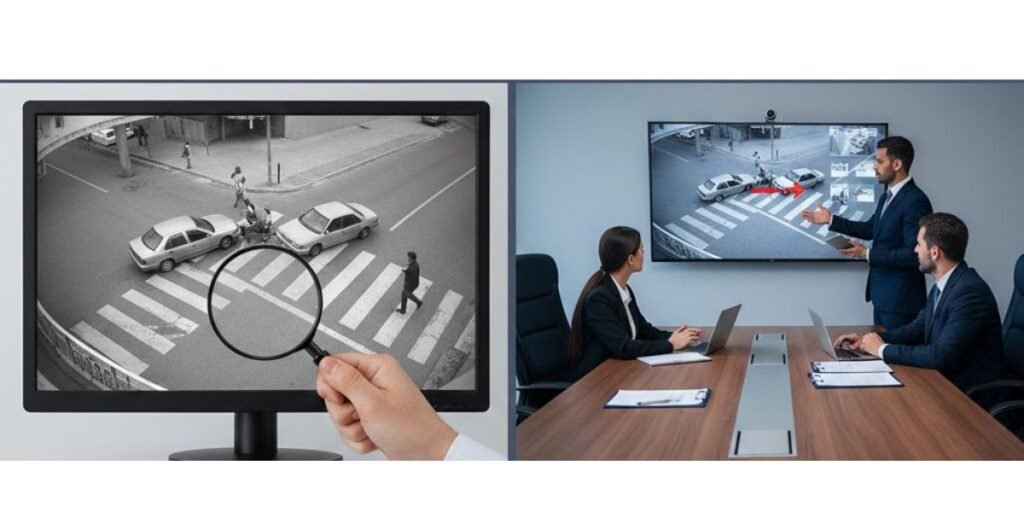
Road traffic accidents are the most frequent type of insurance claims filed in Pakistan. If it’s a car colliding with a motorcycle, a truck rear-ending a sedan on the Motorway, or a rickshaw disregarding a traffic signal, the insurance company’s initial inquiry remains the same: “Who was at fault?” This question is crucial to determining liability, claim payouts, and the parties’ overall handling of the accident.
Before CCTV, it was one person’s word against another. Today, if your car, the other vehicle, or even a nearby shop has a good camera, the footage can instantly show:
- Who ran the red light?
- Who was speeding or driving in the wrong lane?
- If the brake lights of the front vehicle were working
- If a pedestrian suddenly jumped in front of the vehicle
This is precisely how CCTV helps in accident claims; it removes guesswork and emotional arguments. Insurance companies like EFU, Adamjee, Jubilee, and State Life now fast-track claims when clear CCTV evidence for insurance claims is provided.
If you haven’t upgraded your premises’ security yet and are considering installing CCTV for your home or office, HikVision CCTV cameras are highly recommended. You can purchase them from Orient CCTV.
Role of CCTV in Insurance Verification for Theft and Burglary Claims
Home and business burglary claims have historically been some of the most contested by insurance companies. Policyholders often report stolen items, including jewelry, cash, electronics, and laptops.
However, without clear evidence of forced entry or the theft itself, many insurers reduce payouts or outright reject claims, labeling them as potential “inside jobs.” This practice has led to frustration and distrust among those seeking rightful compensation for their losses.
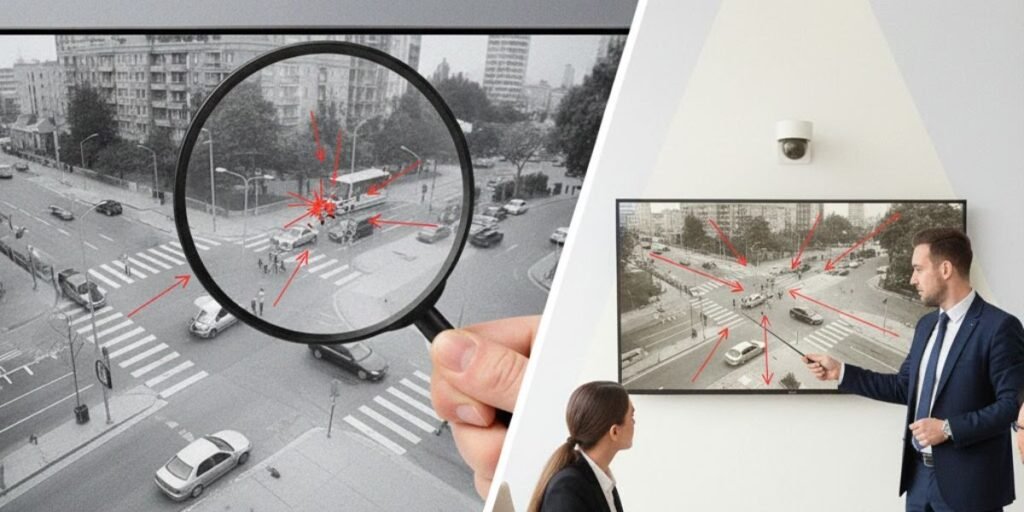
Today, high-quality CCTV systems (especially those with night vision and motion detection) capture the entire incident:
- The exact time the burglar entered
- How they entered (window, roof, main door)
- What items did they take?
- Their face, clothing, and even the getaway vehicle
When you submit this footage along with the FIR, the role of CCTV in insurance verification becomes undeniable. Most reputable companies in Pakistan now approve burglary claims within days, rather than months, when solid video evidence is provided.
CCTV in Workplace Accidents and Employee Injury Claims
Factories, warehouses, shopping malls, and even offices are now legally required under labor laws to install cameras in key areas. When a worker gets injured, if by machinery, falling objects, or slipping, the first thing both the employer’s insurance and the Employees’ Old-Age Benefits Institution (EOBI) ask for is CCTV footage.
The video can prove:
- If the worker was wearing safety gear
- If proper safety protocols were followed
- If the incident was genuinely accidental or due to negligence
This protects both honest workers who deserve compensation and employers from false claims.
Using CCTV Footage in Court for Legal Disputes
Pakistani courts now routinely admit digital evidence under Qanoon-e-Shahadat Order 1984 (Article 164), which allows courts to accept evidence produced through modern devices. Session judges and High Courts have repeatedly ruled that time-stamped, untampered CCTV footage is admissible and carries very high evidentiary value in:
- Hit-and-run cases
- Assault and robbery trials
- Property boundary disputes
- Domestic violence cases
- Fraud and cheating complaints
In many cases, just the mention that clear CCTV evidence exists makes the opposite party agree to an out-of-court settlement because they know they can’t win.
How to Make Sure Your CCTV Footage is Accepted as Evidence
Not every recording is accepted. Courts and insurance companies reject footage if:
- The date and time stamp are missing or incorrect.
- Video quality is too poor to identify people or number plates.
- There is proof of tampering or editing.
- Chain of custody is not maintained (who downloaded it, where it was stored)
When choosing surveillance equipment, it’s crucial to select reputable brands that prioritize security features such as watermarking and encrypted storage. Trusted brands such as HikVision, IMOU, and Dahua have established a solid reputation. These brands are known for delivering high-resolution, court-admissible footage with accurate time stamps, ensuring your security footage is reliable and legally valid in various situations.
Final Thoughts
If you’re a homeowner, a shop owner, or running a factory, installing a high-quality CCTV system is no longer a luxury; it’s a safeguard for your family, business, and legal rights. And when it comes to budgeting, you’ll be surprised how affordable it has become. Current CCTV Camera Prices in Pakistan start at PKR 4,500 per camera for reliable, branded systems. For the best packages, contact us today. We’re here to assist you.