Cat6 UTP vs Cat6A S/FTP for CCTV: Choosing the Right Cable
A CCTV system is only as reliable as the cable carrying its video feed. You choose cameras carefully, but the Ethernet cable running behind the wall often gets picked based on whatever is cheapest at the shop. That decision can cause flickering footage, dropped connections, and PoE power issues months later.
Understanding the real difference between Cat6 and Cat6A cabling helps you avoid these problems early.
What Sets Cat6 and Cat6A Apart?
Cat6 vs Cat6A for CCTV comparisons usually start with bandwidth and speed. Cat6 supports Gigabit Ethernet over standard 100-meter channels and can support 10Gbps over shorter runs, with the exact distance depending on cable and channel performance. Cat6A supports 10Gbps across the full 100-meter channel. Cat6A extends that 10 Gbps capability across the entire 100-meter run, doubling the bandwidth ceiling and using a thicker conductor gauge.
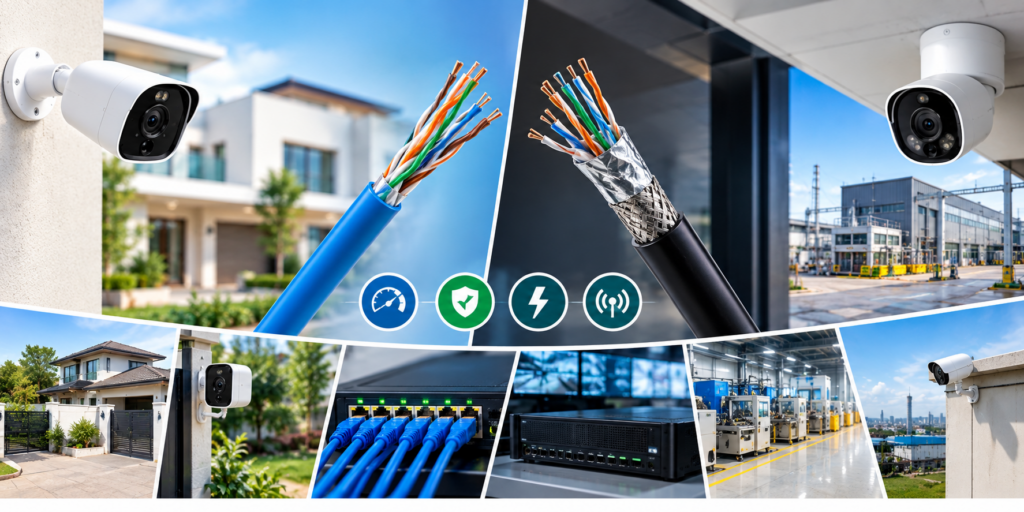
The other major difference is shielding. The other major consideration is cable construction. UTP has no overall shielding, while shielded designs such as S/FTP add foil and braid protection to reduce electromagnetic interference. Both Cat6 and Cat6A are available in unshielded and shielded versions, so treat cable category and shielding as separate specifications when choosing CCTV cabling.
Cat6 UTP vs Cat6A SFTP for CCTV Installations
Choosing between Cat6 UTP and Cat6A S/FTP depends on the cable length, network speed, electrical environment, PoE requirements, and installation conditions. UTP cable has no shielding layer, which keeps it thinner, lighter, and easier to pull through conduit or ceiling spaces. For a typical home or small office with cameras running standard 1080p or 4MP resolution, UTP performs perfectly well and keeps installation costs down.
S/FTP cable adds weight and stiffness because of its shielding layers, but that shielding earns its place in commercial buildings with heavy machinery, fluorescent lighting ballasts, or cable runs near power lines. The foil-and-braid combination can reduce electromagnetic interference that may otherwise cause transmission errors, reduced network performance, or intermittent connectivity.
| Feature | Cat6 UTP | Cat6A S/FTP |
| 10Gbps capability | Shorter runs, depending on channel performance | Designed for up to 100m |
| Shielding | None | Individual-pair foil plus overall braid |
| EMI protection | Relies on cable construction and installation | Better protection when correctly terminated and grounded |
| Typical use | Homes, offices and standard CCTV installations | Longer, high-performance or high-EMI installations |
| Installation | Generally easier to handle | Typically thicker and more rigid |
Which Cable Is Best for CCTV Cameras in Different Scenarios
Figuring out the right cable for your CCTV cameras depends less on brand names and more on where the cable will run and how far it will go. Here is how the choice usually breaks down.
· Home and Small Office Installations
For a handful of cameras covering a home or a small retail counter, Cat6 UTP is generally enough. Runs are usually short, interference is minimal, and the lower cost keeps the whole project affordable without sacrificing image quality.
· Commercial and Industrial Sites
Warehouses, factories, and sites with heavy electrical equipment benefit from Cat6A S/FTP. The shielding keeps the video feed stable even when cable trays run alongside motors, transformers, or other equipment that generates electrical noise.
· Long Cable Runs Approaching 100 Meters
When a CCTV run approaches the standard 100-meter channel limit, careful cable selection and installation matter more. Cat6 can support Gigabit Ethernet across a standard 100-meter channel, while Cat6A is the better choice when you need 10Gbps capability across that full distance.
· High Resolution and Multi Camera Setups
High-resolution cameras and larger multi-camera systems can increase total network traffic, especially when many streams converge on the same switch or NVR. Cat6 can handle many CCTV installations comfortably, while Cat6A provides greater 10Gbps headroom for larger systems and future network upgrades.
· Outdoor and Rooftop Camera Runs
Cable exposed to weather faces challenges beyond interference, including UV exposure and moisture. Outdoor runs require cable specifically rated for the installation environment, with appropriate protection against UV, moisture, temperature, and physical exposure. Shielding addresses electromagnetic interference, not weather resistance, so consider the cable’s environmental rating separately.
· Budget-Conscious Residential Projects
Not every installation needs the extra spec. A budget-conscious homeowner running two or three cameras over short distances rarely needs shielded cable, since UTP already meets the bandwidth and distance requirements comfortably.
If you are finalizing your camera lineup alongside your cabling plan, Orient CCTV offers a solid range of indoor CCTV camera options for offices, shops, and homes across Pakistan.
When Should You Use Shielded Cable for CCTV?
Deciding when to use shielded cable for CCTV really comes down to honestly assessing the installation environment. If cabling runs parallel to power lines, near large motors, or through areas with heavy fluorescent lighting, shielding is worth the extra cost. If the run is short, indoors, and away from major electrical equipment, unshielded cable performs just as reliably.
Grounding and termination matter just as much as the cable itself. Install shielded cabling with compatible shielded connectors and bond it properly according to the manufacturer’s instructions and applicable standards. Poorly terminated shielding can undermine the protection it is meant to provide.
Picking the Best Ethernet Cable for PoE CCTV Setups
Power delivery adds another layer to this decision. For PoE CCTV, use properly specified copper Ethernet cable rather than copper-clad aluminum (CCA). Conductor resistance affects voltage drop and power delivery, particularly over longer runs.
For PoE, conductor size, cable construction, bundle size, ambient temperature, and the power level all matter. Some Cat6A cables use larger conductors and offer better thermal performance in high-density PoE bundles, but select the cable based on PoE requirements and manufacturer specifications.
For most small camera setups, Cat6 UTP handles PoE power and video comfortably. Larger commercial systems running many cameras on longer cable runs get more consistent power delivery and cooler cable bundles with Cat6A.
FAQs
1. Is Cat6A necessary for a small home CCTV system?
Not usually. A few cameras running short distances work fine on standard Cat6 UTP, and shielding adds cost without a meaningful benefit in a typical home setting.
2. Does shielded cable slow down installation?
Slightly, since S/FTP cable is thicker, stiffer, and needs proper grounding at both ends. The extra installation time is worth it in environments with heavy electrical interference.
3. Can Cat6 and Cat6A be mixed on the same network?
Yes. You can use Cat6 and Cat6A within the same network. The achievable link speed depends on the network equipment and the performance of the complete cabling channel, including the lower-rated sections. For new installations, keeping the cabling specification consistent can make testing, troubleshooting, and future upgrades easier.
4. Does cable choice affect PoE camera power delivery?
Yes, thinner or lower-quality cable increases voltage drop over long runs, which can cause cameras to underperform or reboot randomly. Solid copper cable with the correct gauge avoids this issue.
5. How do I know if my site needs shielded cabling?
Look at what surrounds the cable path. Motors, transformers, fluorescent ballasts, and power lines running close to the cable route are all signs that shielded cable will perform more reliably.
Final Thoughts
Cat6 and Cat6A both do their job well when matched to the right installation. Short, interference-free runs rarely need anything beyond standard UTP, while longer commercial runs near electrical noise justify the extra cost of shielded Cat6A. Look honestly at your cable lengths, your camera count, and what surrounds your cable path before deciding, and the network behind your cameras will stay as reliable as the cameras themselves.
Once your cabling plan is settled, Orient CCTV can help you compare suitable camera options and understand the price of the CCTV camera in Pakistan based on your budget, property, and security requirements. Find the right setup for reliable coverage without overspending on features you may not need.


Lets's Get Social
We are a dedicated professional company that deliver high-quality cameras all over Pakistan

Shariq Tahir
Share On
Related Post