CCTV Planning Guide for Warehouses and Factories in Pakistan
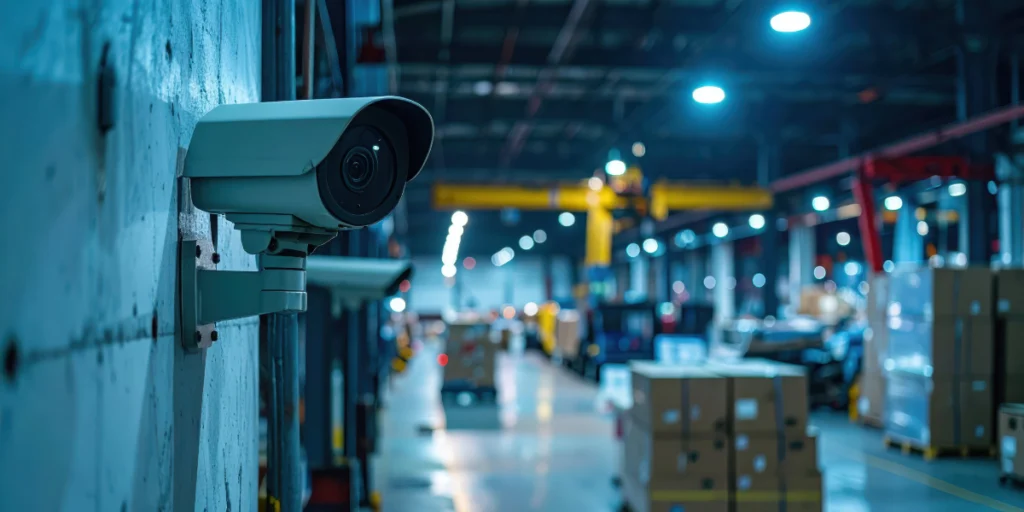
When you own a warehouse or factory in Pakistan, protecting your assets goes beyond just hiring security personnel. Your inventory, equipment, and employee safety all depend on a comprehensive security strategy, and at the heart of that strategy sits a well-planned CCTV system. Many industrial thefts and security incidents can occur in areas with limited surveillance coverage, making blind-spot identification an important part of CCTV planning.
Think about it: would you leave your front door open? Of course not. Similarly, you shouldn’t leave your industrial facility without proper surveillance coverage. The difference is that, unlike a residential space, warehouses and factories have unique layouts, multiple entry points, and complex storage areas that demand strategic planning.
Why Warehouses and Factories Need Strategic Planning
Security in industrial settings isn’t a one-size-fits-all solution. Your warehouse has high ceilings, many shelves, and blind corners that hinder surveillance. Factories, on the other hand, deal with moving machinery, shifting production lines, and worker safety concerns. Without proper planning, you’ll end up with expensive camera setups that miss the critical areas where incidents actually occur.
The cost of getting it wrong is high. Not only do you waste money on poorly positioned equipment, but you also expose yourself to security vulnerabilities that could result in theft, accidents, or worse. That’s why understanding how to plan a CCTV system for a warehouse in Pakistan requires more than just installing cameras; it requires strategic thinking.
A Guide to Warehouse CCTV Camera Placement
The foundation of any effective security setup begins with thorough planning. Before you call any installer or vendor, you need to understand your facility’s unique requirements. This planning phase is where most facility managers either succeed or stumble.
1. Assessing Your Facility’s Layout
Start by walking through your warehouse or factory with a notebook and a measuring tape. Document the square footage, ceiling height, and architectural features. Are there columns blocking sightlines? Do you have outdoor areas that need coverage? Are there loading docks, office spaces, and storage zones?
Your facility assessment should include:
- Total area and dimensions
- Ceiling heights and structural obstacles
- Number and location of entry/exit points
- Storage arrangement and rack heights
- High-value inventory locations
- Emergency exits and fire exits
- Pedestrian pathways and vehicle routes
This isn’t just paperwork; it’s the blueprint that will determine whether your warehouse CCTV camera placement becomes reality or remains a theoretical document.
2. Identifying High-Risk Areas
Every warehouse and factory has vulnerable spots. These are the areas where theft is most likely, where accidents happen, or where you need to monitor critical operations. Common high-risk zones include:
- Entry and exit points (main doors, gates, loading bays)
- High-value inventory storage areas
- Cash handling or transaction zones
- Areas around vehicles and equipment
- Isolated sections where employees work alone
- Server rooms or control centers
- Perimeter boundaries
Once you’ve identified these areas, you understand where your camera coverage must be absolute. This is crucial for developing an effective warehouse CCTV camera placement guide that actually works for your operation.
Installation Tips: Positioning Factory Security Camera for Ultimate Security
Now that you understand your space, it’s time to focus on actual camera positioning. This is where installation tips come into play because improper placement wastes money and creates security gaps.
1. Preparing Your Infrastructure
Factories present unique challenges that warehouse setups don’t always address. Moving machinery, shift work, and production line monitoring require thoughtful installation approaches.
Before installation day arrives, ensure your facility can support a professional CCTV system. This means:
- Reliable electrical power supply with backup options
- Network infrastructure capable of handling video transmission
- Climate-controlled spaces for recording equipment
- Proper cable routing that won’t create trip hazards
- Internet bandwidth is sufficient for high-definition streaming
2. Strategic Positioning for Maximum Coverage
The distance between your camera and the subject matters tremendously. A camera too far away captures movement but not details; too close, and it covers a small area. The standard recommendation is that a person’s face should be discernible in the footage; cameras intended for facial identification should be positioned to provide sufficient image detail, with the optimal distance varying with the camera’s specifications and the environment.
For warehouse environments, consider these positioning principles:
- Entrance coverage: Position cameras to capture the face and body of anyone entering the facility
- Overhead view: Use some cameras for top-down surveillance of inventory areas
- Corner placement: Mount cameras at corners to minimize blind spots
- Height variation: Mix camera heights to cover different zones effectively
3. Overcoming Obstacles and Blind Spots
Here’s where most people struggle: warehouses have obstacles. Tall shelving units create shadows. Overhead structures block views. This is why the best CCTV layout for industrial buildings involves strategic redundancy.
Don’t assume one camera per corner is enough. Instead, overlap your coverage intentionally. If one camera’s view is partially blocked, its neighbor should cover that zone. This requires more cameras than a minimal setup, but it ensures comprehensive protection. Think of it as defensive layering, when one line of defense has a weakness, another is ready to fill the gap.
Best CCTV Layout for Industrial Buildings: Integrating Multiple Elements
Creating the best CCTV layout for industrial buildings requires balancing multiple factors simultaneously. You need coverage of critical areas, redundancy at vulnerable points, and efficient equipment placement.
A proper layout typically includes a combination of fixed cameras, panoramic cameras, and, for larger facilities, PTZ (pan-tilt-zoom) cameras. Coverage zones should overlap where practical to minimize blind spots and improve surveillance continuity.
The total number of cameras depends on your facility’s size; there’s no fixed formula, but proper CCTV coverage planning for warehouses generally requires a number of cameras that varies according to facility size, layout, security objectives, ceiling height, and potential visual obstructions.
Selecting the Right Equipment and Technology
Once your layout is finalized, equipment selection becomes critical. Don’t automatically choose the cheapest option; instead, match camera specifications to your specific needs. A high-resolution camera is essential for facial recognition in entrances, but it might be overkill for general warehouse aisles.
When researching prices on CCTV cameras in Pakistan, you’ll find numerous options ranging from budget solutions to premium systems. We offer a wide selection of security cameras designed to suit different property sizes, surveillance requirements, and budgets.
When evaluating equipment, consider:
- Resolution requirements (720p, 1080p, 4K)
- Low-light performance capabilities
- Storage requirements and retention policies
- Integration with existing IT systems
- Warranty and local support availability
Implementation and Professional Installation
Proper installation isn’t a DIY project. Professional installers understand cable management, proper mounting angles, and system integration. Experienced installers can help ensure the system is designed and installed in accordance with recognized security and installation best practices.
During installation, document everything: camera locations, serial numbers, field-of-view measurements, and cable routes. This documentation becomes invaluable for maintenance and troubleshooting later.
Final Thoughts
A well-planned CCTV system is one of the smartest investments you can make for your warehouse or factory in Pakistan. It protects your assets, deters criminal activity, provides evidence in the event of incidents, and creates a safer workplace for your employees.
Selecting the right equipment is an important part of the process. Trusted brands such as IMOU offer a range of surveillance solutions suitable for industrial and commercial facilities, with features including high-definition video, night vision, motion detection, remote monitoring, and mobile app access.
Explore the latest prices on IMOU cameras in Pakistan at our website and discover reliable surveillance solutions designed to meet the security demands of warehouses, factories, and businesses across the country.


Lets's Get Social
We are a dedicated professional company that deliver high-quality cameras all over Pakistan

Shariq Tahir
Share On
Related Post