
Wired vs Hybrid CCTV Systems: Which Architecture is Best for Long-Term Stability?
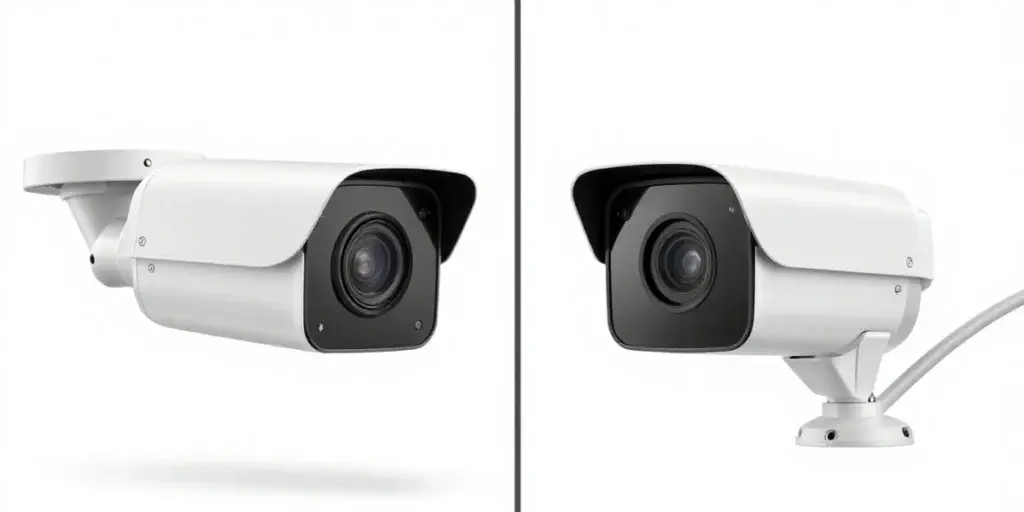
Choosing the right surveillance setup is not just about picking a camera brand. It involves choosing how cameras connect to the recorder, draw power, and maintain a reliable connection over five years. For property owners across Pakistan, from home rooftops to commercial plazas, the debate around wired vs hybrid CCTV systems keeps coming up, and for good reason. The wrong architecture choice today can mean flickering footage, dead zones, and costly rewiring tomorrow.
This blog breaks down both approaches so you can decide which setup holds up over years of daily use, not just on installation day.
What Is a Wired CCTV System?
A wired CCTV system connects every camera to a central recorder using physical cabling, either coaxial cable for older analog setups or Ethernet cable for modern IP and PoE cameras, with no dependence on wireless signals for core recording.
How It Works
Each camera runs a dedicated cable back to a recorder, and that same cable often carries both power and video data in PoE configurations, keeping the chain predictable.
- Power and video travel over a single line, reducing points of failure.
- No competition with household Wi-Fi traffic or router congestion.
- Recording continues locally even if the internet connection drops.
Where Wired Systems Shine
Wired setups suit properties where the owner wants a set-it-and-forget-it system that does not depend on signal strength or network load.
What Is a Hybrid CCTV System?
A hybrid CCTV system blends wired and wireless cameras on a single recording platform. Some cameras connect through Ethernet or a PoE switch for guaranteed stability, while others connect wirelessly where running cable is impractical.
This kind of hybrid surveillance system suits properties with a mix of easy-access areas and harder-to-reach corners, such as a boundary wall far from the main building or an upper floor added after the original wiring was completed.
Two Common Hybrid Configurations
- Wireless-first setup: A wireless NVR acts as the hub, with wired cameras feeding in through a PoE switch and wireless cameras pairing over a local network
- Wired-first setup: A wired NVR forms the backbone, with a handful of wireless cameras added for flexible coverage in hard-to-cable areas
Both configurations balance installation convenience against performance, though that balance shifts depending on how many cameras run wirelessly.
Wired vs Hybrid CCTV Systems: Key Differences
Here is where the comparison gets practical. These differences show up most clearly once the system has been running for a while, not on the first day.
| Factor | Wired CCTV System | Hybrid CCTV System |
| Signal consistency | Immune to wireless interference | Wired zones stable, wireless zones exposed |
| Installation effort | Higher, requires full cable runs | Lower, cable only where practical |
| Scalability | Predictable, extends existing cabling | Workable, but each wireless addition adds variables |
| Maintenance | Minimal once installed | Periodic checks needed for wireless cameras |
| Best suited for | New builds, full-property coverage | Mixed layouts, hard-to-cable corners |
Neither option is wrong. The right pick depends on your property layout, how many areas are hard to cable, and how much long-term consistency matters to you.
Which Offers Better Long-Term CCTV Stability?
This is the real question most property owners are trying to answer, and it deserves an honest, objective look rather than a one-line verdict.
Cabling and Signal Reliability
Over a multi-year lifespan, cabled connections tend to degrade far more slowly than wireless links. A physical cable does not lose strength because a wall was added nearby or a neighbor installed a new router. Wireless segments, even in a well-planned hybrid setup, remain exposed to gradual signal drift, new-device interference, and coverage gaps that arise as properties change over time. This is the core reason wired architecture is often linked to stronger long-term CCTV stability.
Scalability and Future Expansion
If you expect to add cameras later, a wired backbone makes expansion more predictable, since each new camera simply taps into the existing cabling and power infrastructure. A hybrid system can still expand, but each additional wireless camera reintroduces the same signal and network-load variables that wired segments avoid entirely.
Every wired or hybrid setup depends on a solid recording backbone, starting with the right network video recorder for your camera count and storage needs. If you are weighing your options for a home or commercial property in Pakistan, we can help you match the right NVR and camera mix to your layout.
Environmental and Structural Factors
Properties with thick concrete walls, metal structures, or significant distance between buildings challenge wireless signals more than open layouts. In such cases, leaning more heavily on wired segments, or opting for a fully wired system, holds up better against structural interference.
Choosing the Right Hybrid Surveillance System for Your Property
If a fully wired setup is not practical everywhere, a thoughtfully designed hybrid surveillance system can still deliver dependable coverage, provided the wired backbone carries the highest-priority zones.
Practical Guidelines for Better Stability
- Assign wired connections to entry points, parking areas, and other high-priority zones first
- Reserve wireless cameras for secondary or hard-to-cable areas
- Keep wireless cameras within reasonable range of the router or wireless NVR
- Review camera placement periodically, since building changes can affect wireless performance
A thoughtfully designed hybrid setup can approach wired-level reliability, as long as the wireless portion is limited to genuinely difficult-to-cable spots rather than a default choice out of convenience.
Final Thoughts
When it comes down to wired vs hybrid CCTV systems, there is no single answer that fits every property. A wired one generally offers the strongest long-term CCTV stability, fewer points of failure, and more predictable scaling, making it a strong fit where cabling is practical from the start. A well-planned hybrid setup offers a practical middle ground for properties with mixed accessibility, prioritizing wired connections where possible. Regardless of your choice, your system’s backbone, including the recorder, cabling, and switches, requires careful planning rather than being an afterthought.
A system built to last starts with the right components, specified correctly from the start. Whether you need NVRs, cabling, or want to find out the current PoE switch price in Pakistan, we can help you plan a setup that stays stable for years, not just the first few months. Get in touch and let us match the right architecture to your property.


Lets's Get Social
We are a dedicated professional company that deliver high-quality cameras all over Pakistan


Shariq Tahir
Share On
Related Post