Detecting Deepfake Tampering in CCTV Recordings
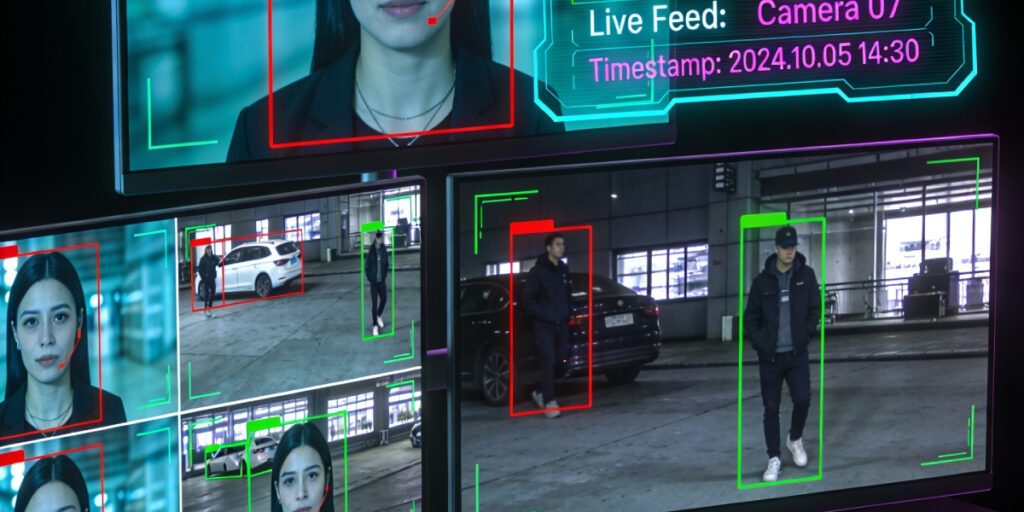
In today’s digital age, security footage is vital for businesses, law enforcement, and property owners across Pakistan. With rapid advances in artificial intelligence, however, security professionals face a growing and unsettling question: how can we trust what we see on screen? Deepfake technology poses a significant challenge by making evidence easier to manipulate, and distinguishing real footage from fabricated content now requires a more advanced and deliberate approach.
This article explores the methods, tools, and strategies for deepfake detection in CCTV recordings, helping to improve the reliability of your security verification process. It is worth noting upfront that no system can guarantee complete immunity to manipulation, but the right combination of tools and practices can substantially reduce your risk.
Understanding Deepfakes and Their Impact on Surveillance
Deepfakes are synthetic media created using deep learning algorithms that can replace, manipulate, or fabricate faces and actions in videos. This technology can make someone appear to say words they never spoke, perform actions they never took, or show up in locations they never visited. The term itself derives from the deep learning networks used to produce these convincing forgeries.
For surveillance systems, deepfakes represent a serious and growing vulnerability. Imagine security footage being used as evidence in a legal case, only for investigators to discover later that key portions were artificially generated. The consequences can be severe, ranging from false accusations and wrongful outcomes to criminals evading justice and investigations being compromised entirely.
Why Deepfake Security Risks in Surveillance Matter
The stakes are higher than ever. Your CCTV may have captured what appears to be irrefutable evidence, but without proper verification, you could unknowingly be relying on manipulated footage. Deepfake security risks in surveillance affect not just individual properties but also businesses, law enforcement agencies, and innocent people caught in the middle. For anyone responsible for managing or acting on security footage, understanding these risks is no longer optional.
How to Detect Fake CCTV Footage
There is no single foolproof method, but a layered approach combining human observation with technology gives you the best chance of identifying manipulation. Here is a breakdown of the key techniques for how to detect fake CCTV footage.
Visual Inspection Techniques
The first line of defense starts with careful observation. While deepfake technology has improved dramatically, older or lower-quality forgeries can still leave behind visual artifacts. Look for unnatural blinking patterns, inconsistent lighting across the face, blurring around facial edges, or jerky and unnatural movement. These cues can sometimes signal manipulation without any technical tools.
That said, relying solely on human observation is becoming increasingly risky. Modern AI-generated video can closely mimic natural facial behavior, and heavily compressed CCTV footage makes these subtle cues even harder to spot. Visual inspection should be treated as a starting point, not a final verdict.
Audio Analysis for Verification
Many people focus exclusively on visual elements, but audio can also reveal tampering. In some cases, deepfakes show audio inconsistencies such as mismatched lip-sync, unnatural speech patterns, or a slightly robotic vocal quality that lacks the natural inflections of human speech. Background noise anomalies can also be a telling sign.
It is worth noting, however, that many CCTV systems capture limited or low-quality audio, which can make this method less reliable in standard surveillance environments. Like visual inspection, audio analysis works best as one layer within a broader verification process.
AI Video Tampering Detection: The Technological Solution
When human observation reaches its limits, purpose-built technology steps in. AI video tampering detection systems use machine learning models to identify potential signs of manipulation with a level of precision that is simply not achievable through manual review alone.
Understanding AI Detection Systems
AI detection systems are trained to spot inconsistencies that are invisible to the human eye. They examine frame-by-frame irregularities, detect compression artifacts that suggest post-processing, and identify statistical anomalies in pixel distributions. Their ability to process large volumes of footage quickly makes them a practical solution for organizations managing extensive surveillance infrastructure.
Some advanced research methods also explore detecting subtle biological signals, such as remote photoplethysmography (rPPG), which looks for micro-variations in skin color caused by blood flow. These techniques show real promise, though they are currently most effective in controlled environments and are not yet widely reliable across standard CCTV footage.
AI Tools for CCTV Video Verification
A growing number of sophisticated AI tools for CCTV video verification have emerged in recent years. These platforms use convolutional neural networks (CNNs) and other deep learning architectures to authenticate footage. Some focus on facial recognition consistency across frames, while others analyze physiological signals such as subtle heart rate variations detectable through micro-changes in skin tone.
The most effective solutions use ensemble methods, combining multiple detection algorithms to cross-verify results. This approach significantly reduces both false positives and false negatives, producing a more reliable and defensible verification outcome.
Deepfake Detection in CCTV: Best Practices and Implementation
Knowing the tools is one thing. Putting them to work effectively requires a structured approach. Here are the core practices for implementing deepfake detection in CCTV across your security infrastructure.
Establishing a Verification Protocol
Your security infrastructure should include a systematic and repeatable approach to footage verification. When recordings become critical evidence or require authentication, initiate a multi-stage process: begin with visual and audio inspection, move to automated AI analysis, and for high-stakes situations, bring in forensic professionals with specialized expertise. Having a documented protocol ensures consistency and reduces the risk of human error.
Choosing the Right Tools and Platforms
Not all detection tools are created equal. When evaluating AI tools for CCTV video verification, look carefully at their track record, the datasets they were trained on, and their published accuracy rates. Prioritize solutions that provide transparent reports clearly explaining what triggered a positive detection result, as this is critical when footage needs to hold up under scrutiny.
If you are based in Pakistan and looking to upgrade your surveillance infrastructure with reliable equipment, visiting the best CCTV camera shop in Pakistan can help you select cameras and systems specifically designed for high-integrity footage capture. Orient CCTV provides solutions with built-in authentication features, secure storage, and tamper-evident logging that support forensic verification from the ground up.
Staff Training and Awareness
Technology is only one piece of the puzzle. Your team needs training on recognizing deepfake indicators and, equally importantly, understanding the limitations of human observation. Regular workshops and updates on emerging deepfake techniques help keep your security personnel informed and prepared, rather than overconfident in what they see.
The Technical Deep Dive: How Detection Works
Deepfake detection algorithms examine multiple physiological signals that are imperceptible to the human eye. They analyze heart rate variations that appear as micro-fluctuations in skin color across the face, study the consistency of eye reflections and light behavior across different frames, and evaluate facial muscle activation patterns to check whether they align with actual human physiology.
One particularly effective approach involves analyzing biological signals embedded in real video. Authentic footage contains subtle variations in blood flow patterns that deepfakes typically struggle to replicate convincingly. These signals appear as minute color shifts across the face throughout the recording, and sophisticated algorithms can detect their absence or abnormality with a high degree of reliability.
Strengthening Your Security Posture
Organizations should treat deepfake detection as a core component of their broader security strategy, not an afterthought. This means investing in quality surveillance equipment, implementing robust verification procedures, and staying informed about emerging threats and the technologies designed to counter them.
When considering upgrades to your surveillance system, take time to research the High Tech Camera Price in Pakistan and factor in not just the upfront equipment cost but also the long-term reliability and verification capabilities of what you are purchasing. Systems from providers like Orient CCTV are equipped with features designed for advanced surveillance, including secure storage, encryption, and tamper-evident logs that support forensic verification of footage when it matters most.
Final Thoughts
The intersection of deepfake technology and surveillance presents real challenges, but also real solutions. While the threat continues to evolve, current AI video tampering detection tools are already making a meaningful difference. By combining this technology with human expertise and well-defined verification protocols, organizations can maintain genuine confidence in the integrity of their security footage.
The future of surveillance security belongs to those who take proactive steps today. Start by evaluating your existing infrastructure, developing a clear process to detect fake CCTV footage, and investing in both the right tools and the right training. Whether you are protecting a small business or managing security across a large enterprise, verifiable and well-managed footage is essential for reducing manipulation risk and maintaining trust in your surveillance systems.


Lets's Get Social
We are a dedicated professional company that deliver high-quality cameras all over Pakistan

Shariq Tahir
Share On
Related Post