Dual-Lens vs Triple-Lens Wi-Fi Cameras: Which to Choose?
Picking a security camera used to mean choosing a single angle and living with the blind spots that came with it. Multi-lens Wi-Fi cameras now let one device watch two or three directions at once, which sounds like an easy upgrade on paper.
But does an extra lens actually close a real coverage gap, or does it just add another screen to check? This guide explains how dual-lens and triple-lens cameras work, where each one earns its keep, and how to choose the setup that fits your property.
How Do Multi-Lens CCTV Cameras Work?
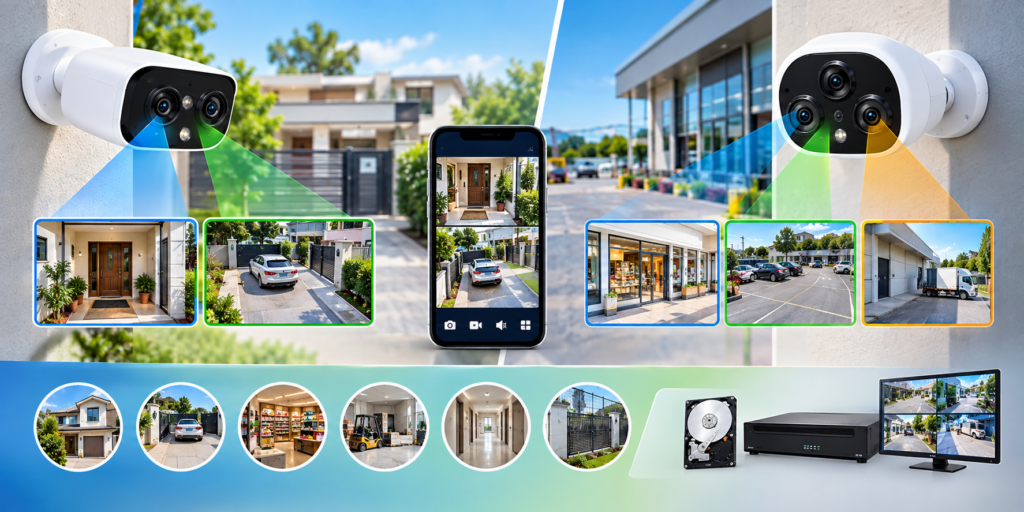
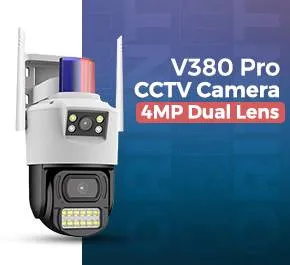
A multi-lens camera is a single housing built around two or more independent lenses, each with its own image sensor. Instead of stitching footage from separate cameras together after the fact, the device records and streams multiple views at the same time from one mounting point. One lens can provide a wide overview while the second covers another direction or provides a more detailed view, depending on the camera design. The exact arrangement varies by design, so check how each lens operates before buying.
A triple-lens camera adds another imaging channel, giving the manufacturer more flexibility to cover separate directions, wider areas, or different detail zones from one housing. The exact arrangement varies by model. Depending on the camera and app, the individual lenses may appear as separate video feeds, split views, or a combined view. This lets you monitor multiple areas from one device, although the exact viewing experience varies by model.
That single-housing design is exactly what makes the coverage question worth exploring further.
Top Benefits of Dual-Lens Security Cameras
Here are the advantages of dual-lens cameras you will enjoy:
- A dual-lens setup can reduce blind spots when the two lenses cover genuinely different areas.
- One lens can provide a wide overview while the second covers another direction or provides a more detailed view, depending on the camera design.
- This is particularly useful at entry points to verify visitors’ identities and their origin, such as confirming they came from the street.
- A dual-lens camera may use less storage than a comparable triple-lens model because it typically produces fewer video streams, although actual storage requirements depend on resolution, bitrate, frame rate, compression, and recording settings.
- For areas like driveways, gates, or single-wide frontages, a dual-lens camera can often provide broader coverage without the complexity of a third lens.
What Property Areas Can Benefit From Multi-Lens Coverage?
For some property layouts, a multi-lens camera can provide more useful coverage from a single mounting point. The benefit of a second or third lens depends on where each lens is directed and which areas need to be covered. The following property types are common examples.
· Home Entryways and Porches
A porch camera often needs to watch the door and the street approach at the same time. One lens can hold the doorway while the second covers the gate or street approach, depending on how the camera is designed.
· Driveways and Parking Areas
Driveways run long and narrow, so a single wide lens can lose detail at the far end. A second lens angled toward the gate keeps the whole stretch usable, showing both the vehicle entering and the person stepping out.
· Storefronts and Shutters
A storefront camera often needs to cover the counter, the shutter, and the pavement outside. A triple-lens unit may cover all three areas from one mounting point, depending on the lens arrangement and field of view.
· Warehouse Yards and Loading Bays
Loading bays involve movement on more than one side at once, with trucks reversing in, staff moving stock, and a gate further back. A multi-lens camera mounted on the corner post can cover several of these zones at once.
· Apartment Balconies and Corridors
In apartment blocks, a corridor camera often needs to see both directions down the hallway. Two lenses pointed at opposite ends can reduce the blind spot a single fixed lens might leave around a corner.
· Boundary Walls and Side Gates
A side gate is easy to overlook until it becomes the weak point in a boundary wall. Adding a lens that faces the gate can help cover a gap alongside the main lens watching the yard.
Dual Lens vs Triple Lens CCTV Camera: Which One Fits Your Property?
The decision usually comes down to how many distinct angles a single spot genuinely needs. The table below breaks down where each format works best.
| Factor | Dual-Lens Camera | Triple-Lens Camera |
| Coverage | Two viewing directions or zones, depending on design. | Three viewing directions or zones, depending on design. |
| Best for | Doorways, driveways, gates, and areas needing two distinct views. | Larger areas or locations needing three distinct viewing zones. |
| Storage load | Often lower than a comparable triple-lens model. | Often higher because of the additional video stream. |
| App setup | Depends on the model and viewing interface. | May require managing additional feeds or views. |
| Ideal property | Homes and locations with two useful viewing angles. | Stores, warehouses, yards, and larger areas with three useful viewing angles. |
The right lens configuration depends on your property’s layout, coverage needs, and mounting position. Orient CCTV supplies CCTV cameras in Pakistan in different configurations, making it easier to find a camera suited to your space.
Are Triple Lens Security Cameras Worth It?
The honest answer depends on the number of blind spots on your property, not on the marketing around the third lens. A triple-lens camera can be cost-effective when it reduces the need for multiple separate cameras, mounting points, and connections. On a busy corner post covering a store entrance, alley, and delivery area, one triple-lens unit can be simpler to manage than three individual cameras.
On smaller properties with a single entry, the third lens often points at a wall or inactive area, adding cost and storage without useful footage. Before selecting a triple-lens model, walk the property and confirm each lens has a purpose. If so, the extra cost pays off. If not, a dual-lens or well-placed single-lens camera usually suffices.
Frequently Asked Questions
1. Do dual-lens cameras record two separate videos?
Yes. Each lens has its own sensor and produces its own video feed, so the app usually shows both streams side by side or lets you switch between them.
2. Is a triple-lens camera harder to install than a single-lens one?
Mounting is similar since it is still one housing, but setup takes a little longer because each lens needs its own viewing angle checked and its own detection zones configured.
3. Do multi-lens cameras need more storage than single-lens cameras?
Generally, yes, because every additional lens adds another stream to record. A dual-lens camera needs roughly twice the storage of a single-lens model, and a triple-lens camera needs more again.
4. Can a dual-lens camera replace two separate cameras?
In many cases, yes, particularly at entry points where one wide-angle and one tracking angle cover the area that two single-lens cameras would otherwise be needed for.
5. Which is better for a small home, dual-lens or triple-lens?
A dual-lens camera is usually enough for a small home with one main entry point. Triple-lens models suit larger properties or corners where you genuinely need three distinct angles.
Final Thoughts
Choosing between dual-lens and triple-lens Wi-Fi cameras depends on your property’s needs, not just the number. A dual-lens suits most homes and single entry points, while a triple-lens is better for busy corners, storefronts, or yards with many zones. Walk your property, identify blind spots, and select a camera based on actual coverage, not specs. This ensures your investment targets real needs, not unnecessary features.
Ready to upgrade your setup? Orient CCTV offers a dependable range of security cameras in Pakistan, including dual-lens and triple-lens models, with installation and support from a team that understands local properties!


Lets's Get Social
We are a dedicated professional company that deliver high-quality cameras all over Pakistan

Shariq Tahir
Share On
Related Post